
Best Martial Art for Self-Defense
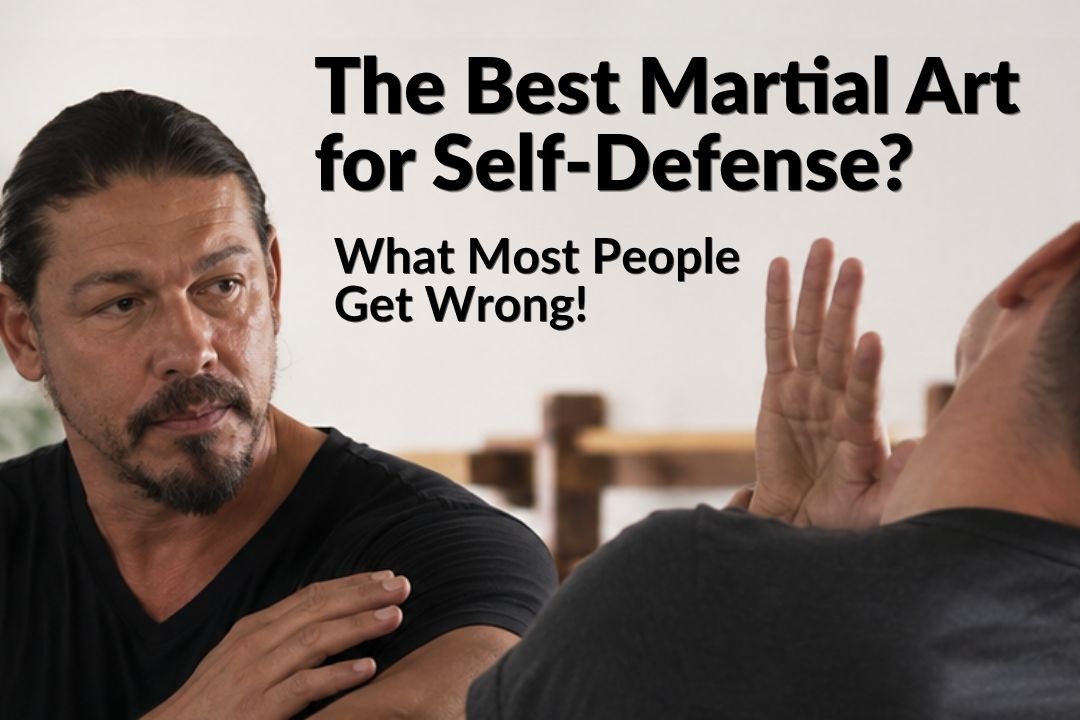
Best Martial Arts for Self-Defense: What Most People Get Wrong
If you are searching for the best martial art for self-defense, you are probably going to find a lot of the same answers: boxing, Brazilian Jiu-Jitsu, Muay Thai, MMA, Krav Maga, Karate, Taekwondo, Wing Chun, and a few others. Usually, these arts are ranked like someone is comparing sports teams. One style is placed above another, a few strengths and weaknesses are mentioned, and then the article moves on.
But that is the first problem. Most people are asking the right question in the wrong way. The real question is not simply, “Which martial art is best?” The better question is, “What kind of training actually prepares a normal person for real self-defense?” That changes everything, because self-defense is not the same thing as fighting.
Fighting asks, “Can I beat this person?” Self-defense asks, “Can I get home safely?” That is a completely different goal. A fight often includes ego, pride, anger, and the willingness to engage. Self-defense should be about awareness, protection, escape, and survival. The goal is not to prove you are tough. The goal is to protect yourself and the people you care about.
After more than 30 years in Wing Chun, and after training with, teaching, touching hands with, sparring with, and learning from people from many different martial arts backgrounds, I can tell you this clearly: there is a lot of confusion around this topic. Some of it comes from style loyalty. Some of it comes from internet arguments. Some of it comes from sport-fighting culture. Some of it comes from traditional martial artists who do not pressure test what they do. And some of it comes from people who simply do not understand the difference between winning a controlled fight and surviving real violence.
I care about the truth. Not hype. Not fantasy. Not defending Wing Chun just because I teach it. The truth is that many martial arts have value. Boxing has value. Brazilian Jiu-Jitsu has value. Wrestling has value. Muay Thai has value. MMA has value. Krav Maga has value. Karate and Taekwondo can have value too.
But when the question is practical, real-world self-defense — not sport fighting, not competition, not trophies, and not ego — Wing Chun deserves a much higher level of respect than it often gets. In fact, when Wing Chun is trained properly, I believe it is the best martial art for real-world close-range self-defense. Not because of tradition. Not because of movies. Not because of blind loyalty. Because its principles match the realities of self-defense better than most martial arts do.
Most People Are Misled About Self-Defense
The biggest mistake people make is confusing fighting with self-defense. A fight is usually something both people choose to participate in, even if one person started it. There is ego involved. There is pride involved. There is often a willingness to stay engaged longer than necessary because one or both people want to win, prove something, or avoid looking weak.
Self-defense is different. Self-defense usually means something has gone wrong. Someone is threatening you. Someone is crowding you. Someone is grabbing you. Someone is trying to intimidate you. Someone is trying to hurt you. Someone may be trying to hurt someone you care about. You may be scared. You may be surprised. You may not have space. You may not know if they have a weapon. You may not know if their friends are nearby.
You may be standing on concrete, near a car, in a hallway, in a parking lot, in a restaurant, near your family, or backed against something. That is not the same as a ring, a cage, a mat, or a tournament. So when people say, “This martial art is best because it works in sport,” they are only telling part of the story.
Sport can prove many things. It can prove timing. It can prove toughness. It can prove conditioning. It can prove whether someone can perform under pressure. That is valuable. But sport does not prove everything about self-defense. Self-defense has different rules because self-defense has no rules.
What Self-Defense Actually Requires
Self-defense is not just punching. It is not just kicking. It is not just grappling. It is not just being tough. Real self-defense includes awareness, avoidance, verbal boundaries, distance control, positioning, close-range control, striking, balance, escaping grabs, protecting your center, dealing with pressure, staying calm under fear, protecting someone else, understanding when to leave, understanding when not to fight, using only what is necessary, and getting home safely.
This is why I do not like shallow martial arts rankings. They usually focus on who would win in a fight. But that is not the real self-defense question. The real question is whether the training can help a regular person deal with real pressure, real fear, real aggression, and real consequences. That is the standard. And when you judge martial arts by that standard, the conversation changes.
The Problem With Most “Best Martial Arts for Self-Defense” Articles
Most articles on this topic make the same mistake. They rank martial arts based on popularity, sport success, or internet reputation. They assume that if something works in a cage, it must automatically be the best for self-defense. That is not true. A martial art can be excellent in competition and still incomplete for self-defense.
A combat sport can make you very tough and still create habits that are risky in a real-world situation. A traditional martial art can have deep principles and still fail if it is trained without pressure. A self-defense system can talk about real-world situations and still become choreography if it is not tested honestly.
So the name of the art matters less than people think. The training matters more. But the principles of the art matter too. Some arts are built around sport. Some are built around competition. Some are built around discipline. Some are built around cultural preservation. Some are built around self-defense. Wing Chun, when properly understood, is built around efficiency in close-range violence. That is why it belongs near the very top of this conversation.
The Hidden Limitations of Sports-Based Training for Self-Defense
Before comparing martial arts, we need to be honest about combat sports. Boxing, wrestling, Brazilian Jiu-Jitsu, Muay Thai, kickboxing, and MMA have done something very good for the martial arts world. They reminded people that pressure matters. They reminded people that you cannot just stand there doing beautiful movements on a compliant partner and pretend you can fight. They exposed a lot of fantasy training. That part is good.
But now the pendulum has swung too far the other way. Many people now act like sport fighting is the same thing as self-defense. It is not. Sport fighting proves what works inside a rule set. Self-defense asks what works when there is no rule set. That difference is not small. It is everything.
Sports Have Rules. Violence Does Not.
Sports need rules. Without rules, there is no sport. There are gloves, rounds, referees, weight classes, illegal techniques, clean surfaces, medical staff, known opponents, starting bells, and usually only one opponent. There is also a clear agreement that both people are there to fight.
None of that is guaranteed in self-defense. In real self-defense, there may be no warning, no space, no clean surface, no person your size, more than one attacker, weapons involved, a wall behind you, a child next to you, legal consequences for doing too much, and no one to stop it. The rules that make a sport trainable are also the rules that make it incomplete for self-defense.
Gloves Change Everything
People underestimate this. Gloves are not just hand protection. Gloves change the behavior of the fight. They allow people to punch harder and longer without breaking their hands as easily. They change defensive habits. They make certain covers and guards work differently. They encourage longer exchanges. They allow fighters to absorb and trade in ways that may be much more dangerous bare-handed.
In real self-defense, if you punch someone in the skull with a bare fist, you may damage your hand. If you trade punches with no gloves, you may get cut, stunned, knocked out, or overwhelmed quickly. If your defense depends on big padded gloves, that defense may not transfer the same way.
This is one reason Wing Chun’s approach is different. Wing Chun does not assume gloves. It does not assume a long exchange. It does not assume you should trade shots. It emphasizes direct attack, centerline control, structure, and simultaneous attack and defense. That is a different mindset.
Rounds Change Mindset
Sport fighters can pace themselves. They can lose a round and come back. They can recover between rounds. They can adjust over time. They can fight strategically for points or position. In self-defense, there is no Round 2. There is no stool. There is no coach giving you water. There is no bell saving you.
The goal is not to win later. The goal is to escape now. That is why a self-defense art should not be built around long exchanges. It should be built around ending the threat as quickly as possible. Wing Chun understands this. Its purpose is not to outlast someone. Its purpose is to intercept, control, strike, disrupt, and finish the situation.
Weight Classes Prove Size Matters
This is one of the biggest arguments people overlook. Combat sports use weight classes for a reason: because size matters. Strength matters. Reach matters. Athleticism matters. If size did not matter, there would be no need to separate fighters by weight.
But real self-defense does not give you a weight class. You do not get to say, “Excuse me, this person is too big for me. Can I get someone my size?” The person threatening you may be bigger, stronger, younger, more aggressive, or more athletic.
That is why any system that depends heavily on athletic dominance is incomplete as self-defense. A self-defense system must assume disadvantage. Wing Chun does that. Wing Chun does not say, “Be bigger.” It says, “Be more efficient.” Use structure. Use angle. Use timing. Use centerline. Use position. Use relaxation. Use directness. Do not meet strength with strength. Do not play the other person’s game.
Referees Change Risk
A referee changes everything. A referee stops illegal strikes. A referee prevents certain kinds of damage. A referee separates fighters. A referee stops the fight when someone cannot defend themselves. A referee saves people from the consequences of a situation going too far.
In self-defense, there is no referee. No one may stop the person from stomping you. No one may stop their friend from jumping in. No one may stop a weapon from appearing. No one may stop the situation when you are hurt. That means your strategy has to be different. You cannot think like a competitor. You have to think like someone who wants to survive and escape.
The Ground Is NOT a Safe Place
Ground skills have value. But choosing to stay on the ground in self-defense is often dangerous. The ground may be concrete. There may be broken glass. There may be a curb. There may be furniture. There may be more than one attacker. There may be a weapon. You may need to protect your spouse, your child, or someone else with you. You may win the grappling exchange and still lose the self-defense situation.
Knowing how to survive on the ground is important. Wanting to stay there in self-defense is a mistake. Wing Chun’s bias is to stay upright, control the center, strike directly, disrupt structure, and escape. That is the right bias for self-defense.
What Real Violence Usually Looks Like
Most self-defense situations do not begin at perfect sparring distance. They often begin too close, too fast, and too messy. Someone gets in your face. Someone shoves you. Someone grabs your shirt. Someone grabs your wrist. Someone blocks your path. Someone corners you. Someone throws a wild punch from close range. Someone rushes you. Someone tries to intimidate you before touching you.
This is very different from two trained people touching gloves and starting at distance. Real violence is often ugly. It is crowded. It is emotional. It is chaotic. It is not always technical. It does not care what belt you have. It does not care what tournament you won. It does not care what style you trained. It only asks one question: can you function under pressure?
The Range Most People Ignore: Close Range
Most people think of fighting in two main ranges: long-range striking or ground fighting. But a lot of self-defense happens in the range between those two. Close enough to shove. Close enough to grab. Close enough to jam your arms. Close enough to trap your hands. Close enough to headbutt. Close enough to panic. Close enough that big footwork may not save you. Close enough that you do not have time to think.
This is the range most people fear. It is also the range many martial arts do not train deeply enough. Boxing is excellent at punching range, but it is not designed around prolonged contact and trapping. BJJ is excellent on the ground, but that is not where you want to stay in self-defense. Muay Thai has a strong clinch, but its sport structure still encourages exchanges. Karate and Taekwondo often prefer distance. MMA covers many ranges, but still operates inside a sport framework.
Wing Chun specializes in the moment distance collapses. That is one of its greatest strengths. Wing Chun does not need perfect distance. It is designed for the moment perfect distance is gone.
The Real Standard for Judging Martial Arts for Self-Defense
If we are going to judge martial arts honestly, we need a better standard than popularity. A martial art for self-defense should teach awareness, avoidance, distance management, close-range control, direct striking, balance, structure, dealing with grabs and pressure, protecting the center, simultaneous attack and defense, simple responses under stress, escaping, legal and moral restraint, progressive pressure testing, and long-term development for normal people.
That last part matters: normal people. Not just fighters. Not just athletes. Not just 22-year-olds with no injuries and unlimited time. A true self-defense art should help adults, smaller people, older beginners, women, teenagers, parents, and people who are not trying to become professional fighters. That is where Wing Chun separates itself.
Boxing for Self-Defense: Excellent Hands, Incomplete Self-Defense
Boxing is one of the most useful martial arts for learning how to use your hands. A good boxer learns timing, distance, footwork, head movement, punching mechanics, defense, and pressure. Those are real skills. Boxing also gives people something many traditional martial arts lack: honest resistance. You cannot fake boxing for very long. If you cannot move, hit, defend, and handle pressure, you find out quickly.
So I respect boxing. But boxing is not complete self-defense. Boxing does not teach kicks, grabs, takedown defense in a complete way, ground survival, weapons awareness, or how to deal with someone grabbing your shirt, pinning you against a wall, or rushing into clinch range. It also depends on gloves in training, and gloves change habits.
Boxing is great for a fistfight. But self-defense is bigger than a fistfight. If all you know how to do is trade punches, you may be playing a dangerous game. Wing Chun does not want to trade punches. Wing Chun wants to control the center, attack directly, disrupt the opponent, and end the situation. That is a major difference.
Brazilian Jiu-Jitsu for Self-Defense: Valuable, But Not the Whole Answer
Brazilian Jiu-Jitsu is valuable. Anyone who says ground skills do not matter is not being honest. BJJ teaches leverage, control, escapes, positional awareness, and calmness under pressure. It helps smaller people survive underneath larger people. It teaches people not to panic when grabbed or pinned. That is all useful.
But BJJ also has major limitations for self-defense when trained primarily as a sport. Too much comfort on the ground can be dangerous. Pulling guard is a terrible self-defense habit. Some sport positions expose you to strikes. Some strategies make sense when there are no punches, no weapons, and no multiple attackers. But real self-defense may include all of those things.
If you go to the ground in a parking lot, you may not know who is coming. If you are tied up with one person, you may not see the second person. If there is a weapon, the entire situation changes. If you need to protect someone else, being wrapped up on the ground may be a disaster.
So yes, BJJ is excellent if the fight goes to the ground. But real self-defense should not be built around staying there. Wing Chun’s priority is different: stay upright, control the center, strike directly, break structure, and create the opportunity to escape.
Wrestling for Self-Defense: Powerful, But Limited Alone
Wrestling is one of the most powerful bases a person can have. Wrestlers develop balance, pressure, body control, takedown defense, toughness, and the ability to fight for position. A good wrestler is hard to move, hard to take down, and hard to control. That is extremely valuable.
But wrestling alone is not complete self-defense. Wrestling does not teach striking, weapons awareness, or how to protect against punches while entering in the same way a striking art does. It can also create a habit of overcommitting to body-to-body control. In sport, that may be exactly what you want. In self-defense, tying yourself up too long can be risky.
Wrestling teaches you how to control bodies. Self-defense also requires knowing how to strike, protect your center, avoid weapons, escape, and not get trapped in a long struggle. Wing Chun approaches control differently. It does not require you to wrestle strength against strength. It seeks to control the center, disrupt structure, and attack through openings. That is often more efficient for self-defense.
Muay Thai and Kickboxing for Self-Defense: Tough, But Not Always Efficient
Muay Thai and kickboxing are strong arts. They develop powerful strikes, kicks, knees, elbows, clinch work, conditioning, and toughness. Muay Thai especially deserves respect because of its close-range clinch tools. People who train Muay Thai usually learn how to deal with impact and pressure. That matters.
But toughness is not the same as efficiency. Muay Thai and kickboxing are still sports when trained in the normal sport format. They often include gloves. They often encourage exchanges. They often reward toughness, conditioning, and athleticism. They may train people to accept trading shots. They may not address weapons, multiple attackers, surprise, legal restraint, or the need to escape quickly.
In a ring, trading may be part of the game. In self-defense, trading can be foolish. You do not know what the other person has. You do not know who is behind you. You do not know if one punch will put your head into concrete. Wing Chun’s mindset is not to trade. It is to take the center, attack while defending, use structure, and end the threat. That is more efficient. And in self-defense, efficiency matters more than toughness.
MMA for Self-Defense: The Best Sport-Fighting Blend, But Still a Sport
MMA is the strongest sport-fighting blend. That is the honest truth. It combines striking, wrestling, clinch work, takedowns, and ground fighting under pressure. MMA fighters are tested. They are tough. They are skilled. They deal with resistance. They understand multiple ranges better than most specialists.
If your goal is to become the best sport fighter possible, MMA is probably the best answer. But sport fighting and self-defense are not the same thing. MMA is still a sport. It has gloves, rounds, a referee, weight classes, rules, a known opponent, and a controlled environment. It assumes one-on-one engagement. It does not include weapons, multiple attackers, true surprise, protecting a family member, or legal decision-making in the same way civilian self-defense does.
Most importantly, the goal is different. In MMA, the goal is to win the fight. In self-defense, the goal is to escape the danger. Those are not the same. MMA may be the best answer for sport fighting. That does not automatically make it the best answer for self-defense.
Wing Chun is not trying to win an MMA match. It is not designed around that rule set. It is designed around close-range efficiency, direct attack, centerline control, simultaneous attack and defense, and ending the threat quickly. That is why judging Wing Chun only by MMA is a mistake. It is like judging a tool outside of the job it was designed to do.
Krav Maga for Self-Defense: Right Idea, Inconsistent Execution
Krav Maga has the right idea in many ways. It is self-defense focused. It often includes scenario training. It talks about aggression, weapons, and escape. It tries to prepare people for real-world violence instead of sport. That is good.
The problem is quality control. Some Krav Maga schools train hard and honestly. Others are mostly choreography. Some teach aggression without enough structure. Some teach techniques that look brutal but are not pressure tested enough. Some lack the depth and refinement of a true martial art.
Aggression is not enough. Without structure, aggression becomes chaos. Without pressure testing, scenario training becomes acting. Without deep principles, techniques become memorized reactions that may fail when the situation changes. Krav Maga often understands the problem. The question is whether the training truly develops the skill to solve it.
Wing Chun gives you a deeper structure for many of the same self-defense goals: directness, efficiency, close-range control, and ending the threat. But it does so through principles that can be refined for a lifetime.
Karate and Taekwondo for Self-Defense: Good Discipline, Often Weak Close-Range Answers
Karate and Taekwondo can both offer real benefits. They can develop discipline, confidence, speed, distance control, flexibility, kicking, and focus. A good school can help people become stronger, more confident, and more disciplined. That matters.
But many modern Karate and Taekwondo schools are heavily shaped by point sparring, forms, rank, and tournament rules. That can create problems for self-defense. Hands may be low. Distance may be too comfortable. The training may rely on clean entries and exits. The student may not spend enough time dealing with grabs, pressure, close-range chaos, clinching, walls, or being crowded.
Forms may be practiced without practical application. Point-based habits can become dangerous when the other person is not trying to score a point but trying to hurt you. Distance is useful until distance disappears. Real self-defense often begins where point-based arts become uncomfortable. Wing Chun starts there. That is why Wing Chun is so important for self-defense.
Why Wing Chun Deserves a Different Level of Respect
Wing Chun is often misunderstood. Some people only know it from movies. Some people only know it from bad online demonstrations. Some people have seen weak Wing Chun and assume the art itself is weak. I understand why that happens. There is bad Wing Chun out there: too much theory, too many compliant drills, too much chasing hands, too much tradition without function, too much talking about centerline without being able to control it under pressure, and too much “master says” without enough honest testing.
But bad Wing Chun does not define Wing Chun. Bad Wing Chun only proves that Wing Chun must be trained correctly. Real Wing Chun is not soft fantasy. It is not performance. It is not arm dancing. It is not memorized techniques. It is not pretending attackers punch one at a time and freeze.
Real Wing Chun is direct, efficient, structured, pressure-aware, and brutally practical. It is designed around the exact problems that matter most in self-defense: close range, pressure, limited space, a stronger opponent, a sudden attack, the need to protect and attack at the same time, the need to end the threat quickly, and the need to use structure instead of brute force. That is why Wing Chun is superior for real-world self-defense when it is trained properly.
Wing Chun Was Built for the Moment Things Go Wrong
A lot of martial arts work best when the situation is clean. Clean distance. Clean timing. Clean rules. Clean surface. Clean opponent. Clean start. Self-defense is not clean. Wing Chun does not require a perfect starting distance, a fair fight, gloves, rounds, a referee, someone your size, a long exchange, or athletic dominance.
Wing Chun assumes the opponent may be bigger. It assumes the distance may already be close. It assumes you may be under pressure. It assumes you may not have time. It assumes you need to protect yourself while attacking. It assumes you cannot afford wasted movement. It assumes you need to end the threat quickly. That is self-defense reality. Wing Chun begins where many martial arts start making excuses.
Centerline Control: The Self-Defense Advantage Most People Miss
The centerline is not just a Wing Chun idea. It is a fighting reality. The centerline is the most direct path between you and the opponent. It gives access to the most important targets. It protects your most vulnerable areas. It controls the path of attack. It affects balance, pressure, and timing. Whoever controls the center often controls the exchange.
Wing Chun is obsessed with this for a reason. In self-defense, you do not have time to chase everything the opponent does. You cannot chase hands. You cannot chase reactions. You cannot get caught fighting the branches. You need to attack the trunk.
That is Wing Chun. Control the center. Occupy the line. Attack directly. Protect yourself while moving forward. Disrupt the opponent’s structure. Make their attack weak while making your attack direct. This is not theory. This is practical self-defense.
Simultaneous Attack and Defense: Why Wing Chun Is Faster
Many martial arts teach defense and offense as separate actions. Block, then punch. Evade, then counter. Defend, then respond. That can work in some situations. But in real self-defense, that extra beat can cost you. If you block first and hit second, you may already be behind. You gave the attacker another moment, another chance, another movement, and another opportunity to continue.
Wing Chun is built around simultaneous attack and defense. Your defense should create offense. Your offense should provide protection. Your hands should not be separate from your structure. Your body should not be separate from your intent. Every movement should do more than one job when possible.
This is efficiency. And self-defense rewards efficiency. Wing Chun is not interested in dramatic blocking. It is interested in taking the line, hitting through the opening, and ending the threat.
Structure Over Strength
This is one of Wing Chun’s greatest advantages. A lot of martial arts work very well when you are younger, faster, stronger, or more athletic. But what if you are not? What if you are smaller? What if you are older? What if you are injured? What if the other person is much stronger? What if you are tired? What if you are protecting someone else?
A self-defense art that requires you to be the better athlete is incomplete. Wing Chun trains structure over strength. Root. Alignment. Elbow position. Relaxation. Forward energy. Centerline. Timing. Angle. Position. Precision. The goal is not to overpower force with force. The goal is to use the body intelligently.
When trained correctly, Wing Chun teaches you to connect the body, protect the center, issue force efficiently, and avoid fighting strength directly. This is why Wing Chun is so valuable for normal people. It does not ask you to become the biggest person in the room. It teaches you not to need to be.
Close-Range Control
Most people do not know what to do when someone gets too close. They panic. They stiffen. They back up blindly. They reach. They push. They turn away. They swing wildly. They lose balance.
Wing Chun trains close-range pressure constantly. It teaches you how to stay organized when someone is already in your space. It teaches you how to keep your elbows connected. It teaches you how to protect your center. It teaches you how to feel pressure through contact. It teaches you how to strike without needing big windups. It teaches you how to attack from where your hands already are.
That matters. In self-defense, you may not get the luxury of chambering a punch, resetting your feet, or creating perfect distance. You may have to act from where you are. Wing Chun specializes in that.
Chi Sao: The Skill Most Outsiders Do Not Understand
Chi Sao is one of the most misunderstood parts of Wing Chun. People see it and think it is a fight. It is not. They think it is a game. It is not. They think it is arm chasing. It should not be.
Chi Sao is a training method for developing sensitivity, pressure, timing, relaxation, centerline awareness, and automatic response through contact. At close range, the eyes are too slow by themselves. The body has to listen. When someone presses, pulls, collapses, opens, stiffens, or changes angle, you need to feel it immediately. Not think about it. Feel it. Respond. Attack. Recover. Control.
That is what Chi Sao develops when trained properly. The goal is not sticky hands. The goal is sticky center. The hands are only the bridge. The real skill is learning how to find the opening, control the pressure, and attack without hesitation. This is a major Wing Chun advantage. Most arts do not develop this level of close-range sensitivity.
Forward Pressure Without Recklessness
Wing Chun teaches forward pressure, but not reckless aggression. There is a difference. Reckless aggression is emotional. Wing Chun forward pressure is intelligent. It is pressure through the center, through structure, through position, and through timing.
The goal is not to run into the opponent. The goal is to take away their space, disrupt their structure, and make their attack weaker while your attack becomes stronger. Real attackers often use aggression to overwhelm people. Wing Chun does not teach you to meet chaos with chaos. It teaches you to take the center back. It teaches you to occupy the space the attacker needs. It teaches you to make them deal with your structure, your pressure, and your attack.
Wing Chun Does Not Believe in a Fair Fight
This is important. Self-defense is not about fairness. If someone forces violence on you, your job is not to give them a sporting chance. Your job is to survive. You do not owe an attacker a fair fight. You do not trade punches to prove toughness. You do not go to the ground to prove grappling skill. You do not play by rules that only help the attacker.
You attack weakness. You take position. You protect your center. You disrupt balance. You end the threat. You escape. We do not believe in a fair fight. A fair fight is for sport. Self-defense is about going home safe. Wing Chun understands that.
The Problem Is Not Wing Chun — It Is Bad Wing Chun
I will be brutally honest. A lot of Wing Chun deserves criticism. Not because Wing Chun is bad, but because many people train it badly. Too much compliant drilling. Too much theory. Too much standing still. Too much chasing hands. Too much talking. Too little pressure. Too little contact. Too little application. Too little testing. Too little understanding of how violence actually happens.
If Wing Chun is only forms and theory, it will not prepare you for self-defense. If Chi Sao becomes a game of hand chasing, it misses the point. If students never feel pressure, they will collapse under pressure. If the instructor says everything is “too deadly to test,” that is usually an excuse.
Real Wing Chun must be tested. Not recklessly. Not stupidly. But honestly. Structure must be tested. Timing must be tested. Pressure must be tested. Footwork must be tested. Centerline must be tested. Entries must be tested. Balance must be tested. Application must be tested. Wing Chun is not made practical by talking about principles. It becomes practical when those principles survive pressure.
What Proper Wing Chun Training Must Include
Proper Wing Chun for self-defense must include much more than forms. Forms are important, but forms are not enough. Forms should train body mechanics, structure, relaxation, alignment, elbow position, centerline, intent, and coordination. Then those qualities must be brought into partner training.
Proper Wing Chun should include structure, root, footwork, centerline control, direct striking, non-telegraphic attack, simultaneous attack and defense, close-range entries, partner drills, progressive resistance, Chi Sao with purpose, pressure sensitivity, balance disruption, wall and corner pressure, grabs and shoves, timing, stress training, scenario awareness, calmness under pressure, and practical application.
The goal is not to look like Wing Chun. The goal is to apply Wing Chun. That is the difference.
Why Wing Chun Is Especially Strong for Normal Adults
Most people looking for self-defense are not trying to become professional fighters. They are normal people. Parents. Adults. Older beginners. Smaller people. Women. Teenagers. People with jobs. People with injuries. People with stress. People with families. People who want confidence. People who want to protect themselves and the people they love.
They do not necessarily want trophies. They do not necessarily want competition. They do not necessarily want to get hit in the head every week. They do not necessarily want a sport. They want practical self-defense.
Wing Chun fits that need extremely well. It is efficient, intelligent, sustainable, close-range, and principle-based. It does not require you to be the biggest or strongest. It can be trained deeply for life. It develops awareness, structure, timing, relaxation, confidence, and control. A self-defense art should not only work for young athletes. It should work for real people. That is one of Wing Chun’s greatest strengths.
Best Martial Art for Beginners
For beginners, the best martial art is one that gives a clear foundation without overwhelming them. A beginner does not need 100 techniques. A beginner needs awareness, stance, balance, footwork, basic striking, basic defense, distance control, close-range confidence, simple responses, and a clear path of progression.
Wing Chun is excellent for beginners because it starts with principles. You learn how to stand, how to relax, how to align the body, how to protect the center, how to punch without telegraphing, how to use the elbow, how to stay rooted, how to move efficiently, and how to attack and defend together.
This matters because principles adapt. Memorized techniques often fall apart when the situation changes. Wing Chun gives beginners a foundation they can continue building for years.
Best Martial Art for Smaller People
Smaller people cannot afford to play a strength game. They cannot rely on overpowering a bigger person. They need leverage, angles, timing, precision, structure, targets, balance disruption, and direct attack. They need to avoid fighting the opponent’s strength.
This is exactly where Wing Chun shines. BJJ can also be valuable for smaller people because it teaches leverage and ground survival. Boxing can help with movement and punching. But Wing Chun is specifically built around not meeting force with force.
A smaller person should not try to trade power with a stronger attacker. They need to control the center, attack openings, use structure, and disrupt the opponent quickly. That is Wing Chun thinking.
Best Martial Art for Women’s Self-Defense
Women’s self-defense should not be taught as fear-based panic training. It should be serious, respectful, practical, and empowering. It should include awareness, boundaries, voice, distance, escape, striking, close-range tools, and realistic pressure. It should not create false confidence. It should not pretend one trick solves everything.
Wing Chun can be excellent for women’s self-defense because it does not depend on matching strength with strength. It teaches structure, centerline, close-range striking, simultaneous attack and defense, forward pressure, sensitivity, and efficiency. These are extremely important when dealing with a larger or stronger attacker.
Again, the school matters. Bad Wing Chun will not help. But properly trained Wing Chun gives women practical tools that do not require them to fight like a bigger, stronger man.
Best Martial Art for Kids’ Self-Defense
For kids, self-defense is not mainly about fighting. It is about confidence, awareness, boundaries, discipline, focus, respect, accountability, knowing when to speak up, knowing when to get help, and knowing how to carry themselves so they are not easy targets.
A good kids martial arts program should not create bullies. It should create confident, respectful, aware young people. Wing Chun can help kids because it teaches structure, focus, body control, calmness, discipline, and practical self-defense concepts without needing sport aggression.
The goal is not to create little fighters. The goal is to help children become harder to intimidate and more confident under pressure.
Best Martial Art for Older Adults
Older adults need self-defense too, but they often need an intelligent approach. They may have injuries, less mobility, balance issues, slower recovery, or no interest in hard sport sparring. That does not mean they cannot train. It means the training must be smart.
Wing Chun can be a strong option for older adults because it emphasizes structure, relaxation, efficiency, centerline control, and close-range skill. It does not require high kicks, explosive athleticism, or competition. It can improve posture, coordination, balance, awareness, and confidence.
Tai Chi can also be helpful for balance, breathing, relaxation, and body awareness, depending on how it is taught. But for practical self-defense, older adults need more than movement. They need awareness, structure, simple tools, and confidence. Wing Chun provides that.
Best Martial Art for Street Self-Defense
People often ask about the best martial art for street fighting. But I do not love the phrase “street fighting.” Self-defense is not street fighting. Street fighting often implies ego. Self-defense should not.
Still, if we are talking about real-world violence, the best martial art should address surprise, close range, striking, grabs, pressure, balance, escape, multiple-attacker awareness, weapon awareness, legal restraint, and emotional control.
Not many martial arts cover all of this well. MMA covers many ranges, but it is still sport-based. Boxing gives excellent hands, but it is incomplete. BJJ gives excellent ground survival, but the ground is dangerous. Muay Thai gives toughness and striking, but it still often encourages exchanges. Krav Maga has the right self-defense intent, but quality varies. Wing Chun directly addresses the close-range, high-pressure, efficiency-based problems that real self-defense often creates. That is why I believe it is the best choice for practical self-defense when trained properly.
Can You Learn Self-Defense Online?
You can begin learning self-defense online. You can build a foundation online. You can learn stance, structure, footwork, centerline awareness, punching mechanics, form, solo drills, body organization, mindset, and practice habits. Online training can be valuable when it is structured.
But online training has limits. You eventually need contact. You need pressure. You need timing. You need feedback. You need another person. Wing Chun especially needs touch at higher levels because sensitivity, pressure, and timing cannot be fully developed alone.
That does not mean online Wing Chun is useless. It means online training should be honest about what it can and cannot do. A video library is not enough. A real online program should include structure, progression, assignments, feedback, community, and live access when possible. Online training can build the foundation. In-person training sharpens the application. Both can work together.
Red Flags in a Self-Defense School
If you are choosing a martial arts school for self-defense, watch carefully. A school can have a strong style name and still train poorly. A school can look impressive online and still fail to prepare students for real pressure. Here are some red flags to watch for.
No Pressure Testing
If everything works only on a compliant partner, you do not know if it works. Training should become progressively more alive over time. Not reckless. Not unsafe. But honest.
Everything Is “Too Deadly”
This is one of the oldest excuses in martial arts. Yes, some techniques cannot be applied fully without injury. But timing can be tested. Structure can be tested. Position can be tested. Pressure can be tested. Balance can be tested. Control can be tested. If nothing can be tested, be careful.
Too Much Theory
Theory is useful only if it can be applied. If an instructor talks endlessly but students cannot function under pressure, something is missing.
No Contact
Self-defense involves contact. If students never feel pressure, they will not know how to handle it.
No Awareness Training
If the school only teaches fighting and never talks about awareness, avoidance, boundaries, or escape, it is missing the point of self-defense.
Too Many Techniques, Not Enough Principles
A hundred techniques will not save you if you cannot apply one principle under pressure. Principles matter more.
Students Look Panicked Under Pressure
Watch the students. Do they move with structure? Do they stay calm? Do they understand what they are doing? Or do they collapse when things get uncomfortable? The students reveal the school.
Green Flags in a Real Self-Defense School
A good self-defense school should have clear signs. It should not be built around fear, ego, fantasy, or blind loyalty. It should develop real confidence, real skill, and real awareness over time.
Clear Principles
The instructor should explain why things work, not just what to do. Students should learn principles they can adapt.
Progressive Pressure
Training should begin safely and gradually become more realistic. Pressure should be introduced intelligently.
Close-Range Training
A self-defense school must deal with close range: grabs, shoves, contact, crowding, walls, and limited space. If close range is ignored, the training is incomplete.
Calmness Under Pressure
Good training should make students calmer, not more reckless. Confidence is not loud. Real confidence is controlled.
Practical Striking
Students should learn how to hit directly, protect themselves, and create an opportunity to escape.
Balance and Structure
Self-defense depends on the ability to stay organized under pressure. Structure matters.
No Ego
A good school should not be built around proving who is tough. It should be built around growth, discipline, respect, and practical skill.
Honest Instruction
A good instructor admits limitations. Every art has weaknesses. Every training method has blind spots. Honesty builds trust.
Best Martial Arts for Self-Defense by Category
Here is the honest breakdown. If your goal is sport fighting, MMA is the best overall blend because it covers striking, wrestling, grappling, and pressure. If your goal is punching, boxing is excellent. If your goal is ground grappling, Brazilian Jiu-Jitsu is excellent. If your goal is takedowns and body control, wrestling is excellent. If your goal is striking power, Muay Thai is excellent. If your goal is self-defense scenarios, Krav Maga has the right intent, although quality varies. If your goal is discipline and distance, Karate and Taekwondo can offer value.
But if your goal is real-world close-range self-defense, Wing Chun stands apart. Wing Chun directly addresses the realities that matter most: close range, centerline control, simultaneous attack and defense, structure over strength, direct striking, pressure sensitivity, efficiency, and ending the threat quickly.
If your goal is competition, choose a combat sport. If your goal is ground competition, train BJJ. If your goal is boxing, box. If your goal is MMA, train MMA. But if your goal is practical self-defense, especially close-range self-defense for real people, Wing Chun gives the most direct path to what matters most.
Common Objections About Wing Chun
“But Wing Chun Does Not Work in the UFC.”
The UFC is not self-defense. It is a sport. A very tough sport. A very skilled sport. But still a sport. There are gloves, rounds, referees, rules, weight classes, and a cage. Wing Chun is not designed for that rule set.
Judging Wing Chun only by MMA is like judging a tool by a job it was not designed to do. The question is not whether Wing Chun wins a sport match under MMA rules. The question is whether Wing Chun’s principles apply to real close-range self-defense. And they absolutely do.
“But I Have Seen Bad Wing Chun Online.”
So have I. There is plenty of bad Wing Chun. There is also bad boxing, bad BJJ, bad karate, bad Krav Maga, and bad MMA coaching. Bad examples do not define the art. They reveal the importance of proper training. Real Wing Chun must include pressure, timing, resistance, contact, and practical application.
“Is Wing Chun Too Traditional?”
It can be, if taught poorly. But real Wing Chun is not about tradition for tradition’s sake. It is about efficiency, structure, centerline, timing, pressure, position, relaxation, and direct attack. These are not outdated ideas. They are timeless self-defense principles.
“Does Wing Chun Need Sparring?”
Wing Chun needs pressure. It needs contact. It needs resistance. It needs timing. It needs testing. But it does not have to copy sport sparring exactly. Wing Chun should test its own principles in ways that preserve its purpose. The goal is not to turn Wing Chun into kickboxing. The goal is to make sure Wing Chun works under pressure.
“Is Wing Chun Enough by Itself?”
Proper Wing Chun gives a very complete self-defense foundation, especially at close range. But no honest instructor should tell you that any one art answers every possible situation perfectly. Ground survival matters. Awareness matters. Weapons awareness matters. Fitness matters. Mindset matters.
That said, Wing Chun gives one of the most intelligent and efficient foundations for real-world self-defense because it focuses on the range and conditions where many real problems happen.
FAQ: Best Martial Arts for Self-Defense
What is the best martial art for self-defense?
The best martial art for self-defense is the one that best prepares you for real-world violence, not just sport fighting. It should teach awareness, distance control, close-range control, direct striking, balance, structure, pressure, escape, and calmness under stress. When trained properly, Wing Chun is the best martial art for close-range self-defense because it is built around centerline control, simultaneous attack and defense, efficiency, and structure over strength.
Is Wing Chun good for self-defense?
Yes. Wing Chun is excellent for self-defense when trained properly. It is especially strong at close range, where many real confrontations happen. It teaches you to control the center, attack while defending, strike directly, use structure instead of brute force, and respond through pressure and contact. But Wing Chun must be trained with pressure, timing, resistance, and realistic application.
Is MMA better than Wing Chun for self-defense?
MMA is better for sport fighting. It is pressure-tested and covers many ranges. But MMA is still a sport with rules, gloves, rounds, referees, weight classes, and a known opponent. Wing Chun is designed for a different purpose. It is designed for close-range efficiency, direct attack, and practical self-defense. If your goal is sport fighting, train MMA. If your goal is real-world close-range self-defense, Wing Chun has the superior self-defense logic.
Is BJJ better than Wing Chun for self-defense?
BJJ is better for ground grappling. Wing Chun is better for close-range striking, centerline control, simultaneous attack and defense, and staying upright. BJJ is valuable if the fight goes to the ground. But self-defense should not be built around staying on the ground. Wing Chun’s priority is to stay upright, control the center, strike, disrupt structure, and escape.
Is boxing good for self-defense?
Yes. Boxing is very useful for self-defense because it teaches punching, footwork, timing, defense, and pressure. But boxing is incomplete by itself. It does not address grabs, kicks, takedowns, ground fighting, weapons, or close-range contact in the same way Wing Chun does.
Is Krav Maga the best for self-defense?
Krav Maga can be good when taught well because it focuses on self-defense situations. But quality varies widely. Some schools train realistically. Others rely too much on choreography and aggression without enough structure. Wing Chun offers deep self-defense principles that can be refined and tested over time.
What is the best martial art for beginners?
Wing Chun is one of the best martial arts for beginners because it teaches a clear foundation: stance, structure, relaxation, centerline, footwork, striking mechanics, and simple self-defense principles. Beginners do not need endless techniques. They need principles they can understand and apply under pressure.
What is the best martial art for women’s self-defense?
Wing Chun is one of the strongest choices for women’s self-defense because it does not depend on matching strength with strength. It teaches centerline control, structure, close-range striking, sensitivity, and simultaneous attack and defense. The quality of the school matters, but properly trained Wing Chun is highly practical for women’s self-defense.
What is the best martial art for older adults?
Wing Chun is a strong choice for older adults because it emphasizes efficiency, structure, relaxation, balance, and close-range control instead of high athleticism, high kicks, or sport competition. Older adults need practical, sustainable training. Wing Chun fits that need well.
Can you learn Wing Chun online?
You can build a strong Wing Chun foundation online through structured lessons, forms, stance, footwork, punching mechanics, centerline awareness, solo drills, and guided practice. But higher-level Wing Chun also needs contact, pressure, timing, and feedback. Online training is valuable for building the foundation. In-person training sharpens the application.
Final Verdict: What Most People Get Wrong
Most people ask, “What martial art wins in a fight?” That is the wrong question. The better question is, “What martial art best prepares me to survive real self-defense?” When you ask it that way, Wing Chun rises to the top. Not because it is popular. Not because it dominates sports. Not because of tradition. Because it is built around the realities that matter most.
Those realities are close range, pressure, efficiency, centerline control, simultaneous attack and defense, structure over strength, direct striking, sensitivity through contact, and ending the threat quickly. Wing Chun is not the best martial art for self-defense because it wins internet arguments. It is the best because it addresses the problems real self-defense actually creates.
It does not ask you to win a fair fight. It teaches you not to need one.
Train Practical Self-Defense at The Dragon Institute
At The Dragon Institute, we teach Dragon Family Wing Chun for practical self-defense. No trophies. No ego. No fair-fight fantasy. Just practical training for real people who want confidence, awareness, structure, close-range control, and the ability to protect themselves and their families.
Our training focuses on efficiency, centerline control, pressure, timing, practical application, and calmness under stress. If you are looking for real self-defense, do not train to win a fair fight. Train to end the threat. Train Wing Chun at The Dragon Institute.