
Ip Man or Yip Man? Which Is Correct?
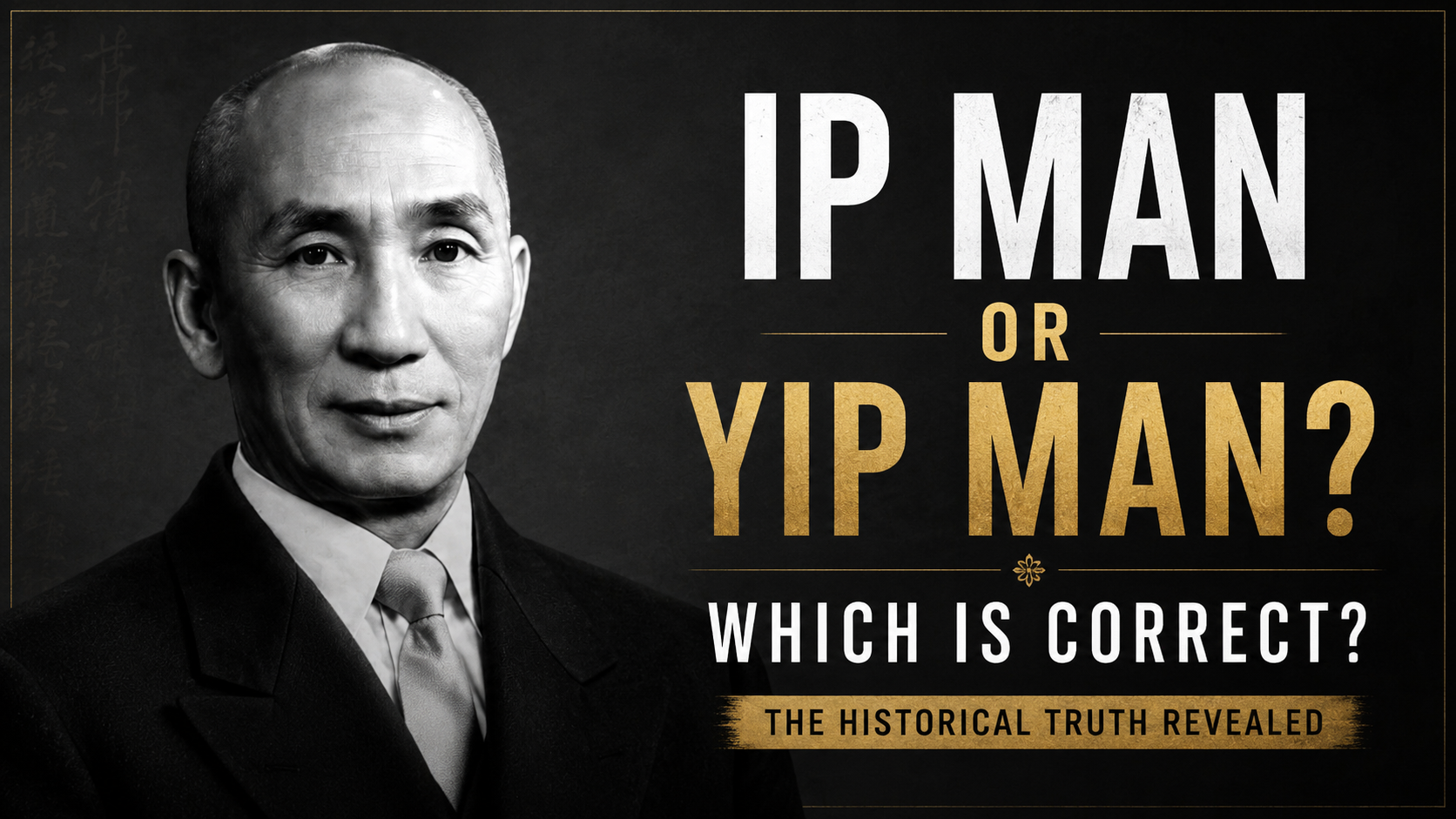
Is it Ip Man or Yip Man?
If you’ve spent any time around Wing Chun, you’ve seen both spellings. Some people write Ip Man. Others insist it should be Yip Man. Ask which is correct and you’ll get several different answers, each delivered with complete confidence.
Confidence and correct are not the same thing.
As for me, I’ve been training since 1995 and always knew him as Yip Man. Then the Ip Man movies came out in 2008 and the rest of the world called him Ip Man (or I.P. Man)
But this isn’t about what most people call him. This is about the correct spelling
And the more I looked into this question, the more I realized that what most people “know” about the name is based on repetition rather than research.
So let’s take a closer look.
Ip Man and Yip Man Are the Same Person
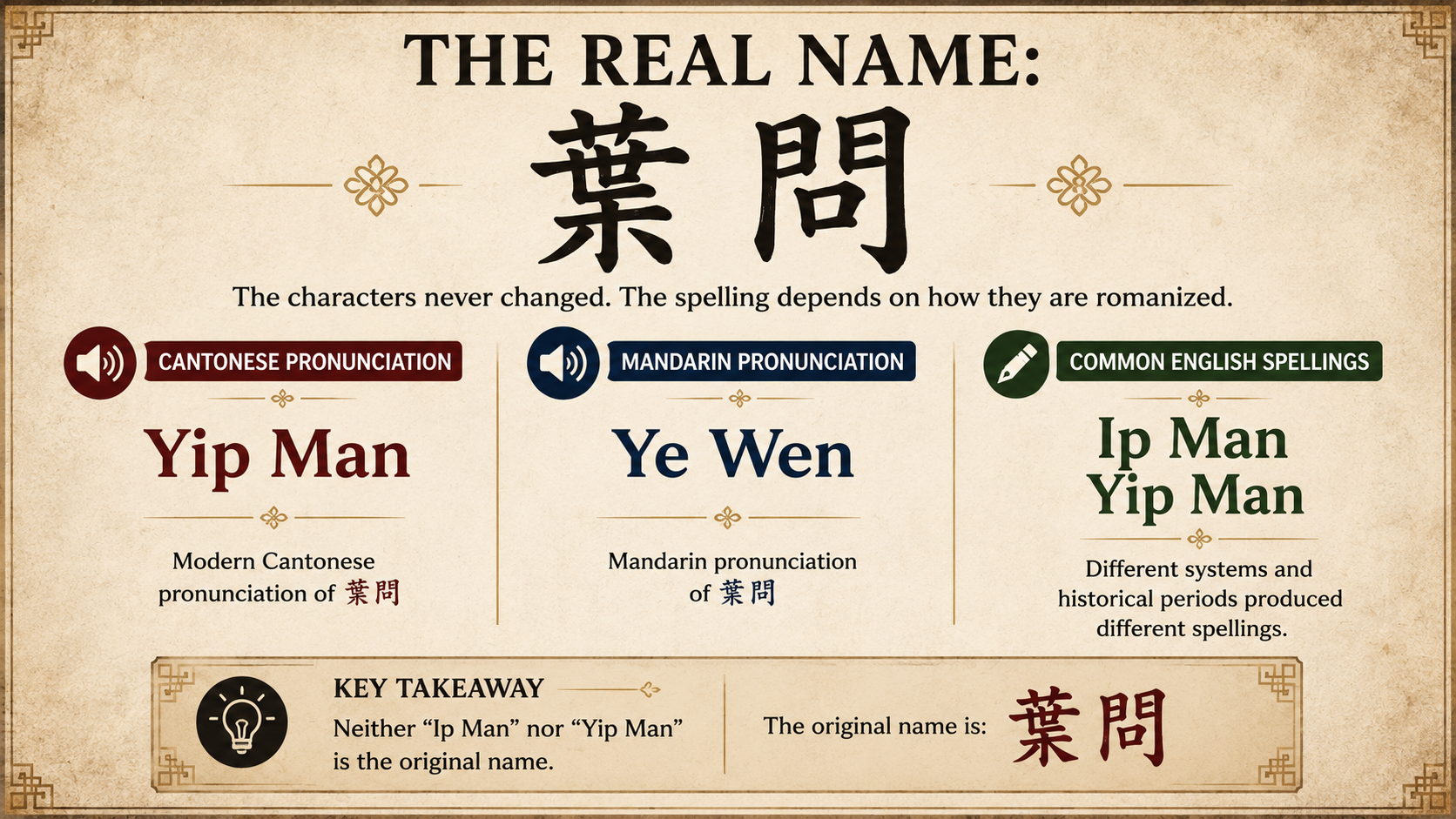
The first thing to understand is that neither “Ip Man” nor “Yip Man” is actually the original name.
The man’s name was:
葉問
Those are the Chinese characters. They never changed.
The debate only begins when we try to convert those characters into the Roman alphabet. That process is called romanization.
And that’s where things become complicated.
Why the Same Chinese Name Can Have Different English Spellings
Many Westerners assume a Chinese name should have one correct English spelling.
That’s often not how it works.
Take the surname Lee. Depending on dialect, region, and romanization system, the same surname might appear as Lee. Li. Lei. Lay. Or something else entirely.
The same thing happens throughout Chinese history.
Wong and Huang. Chan and Chen. Cheung and Zhang.
None of these are wrong. They’re different attempts to represent Chinese sounds using English letters.
The surname 葉 is no different.
The Case for Yip Man
From a modern Cantonese pronunciation standpoint, many people argue Yip Man is the more accurate spelling.
Listen to how the surname 葉 is commonly pronounced in Cantonese. “Yip” is a reasonable approximation. Many modern Cantonese romanization systems favor Yip over Ip.
From a linguistic perspective, there’s a strong argument here. If your goal is to capture the sound of the name as closely as possible, Yip makes sense.
But language isn’t the whole story.
History matters too.
The Case for Ip Man
While linguists may prefer Yip, historians point to something equally important.
What spelling did the man and his family actually use?
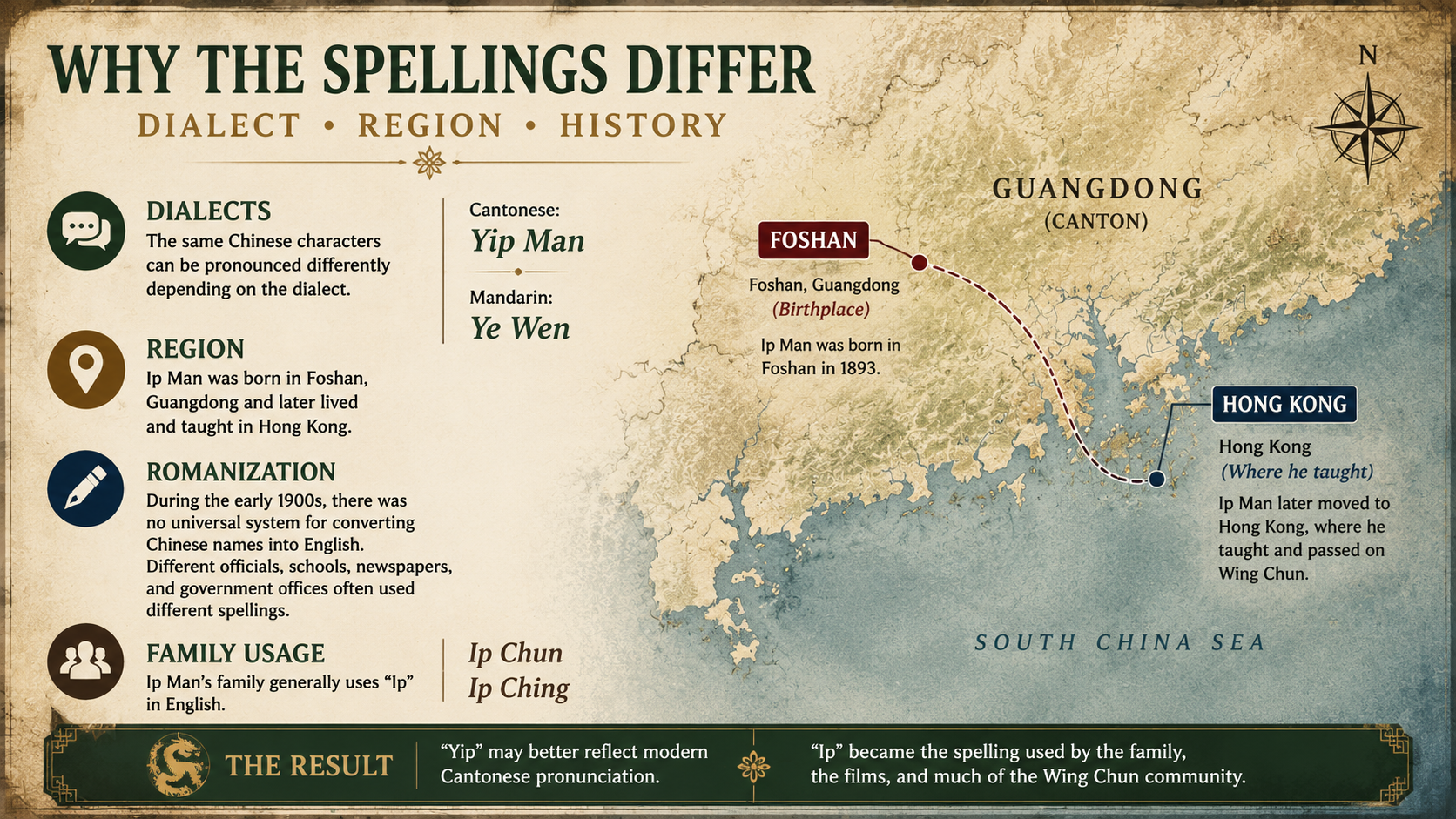
His sons are known internationally as Ip Chun and Ip Ching. Not Yip Chun. Not Yip Ching.
Many organizations associated with the family use the surname Ip. Many students who learned directly from the family use the surname Ip. The films starring Donnie Yen use Ip Man. The vast majority of Wing Chun literature published over the past several decades uses Ip Man.
It’s worth noting who carried this spelling forward. Ip Man’s most famous student was Bruce Lee, who trained under him in Hong Kong before becoming a global icon. The lineage that reached the world used Ip.
At some point, a spelling becomes more than a linguistic choice. It becomes a historical convention.
The Problem with Looking at History Through Modern Eyes
People often assume modern romanization rules existed a hundred years ago.
They didn’t.
In early twentieth-century China and Hong Kong, there was no universally accepted system for converting Chinese names into English. Spelling was inconsistent. Government offices used different conventions. Immigration officials used different conventions. Families used different conventions.
The same person might appear under multiple spellings throughout a lifetime.
This was not unusual. It was common.
So looking at a modern Cantonese dictionary and declaring one spelling correct oversimplifies the situation.
What Ip Man’s Passport and Documents Actually Show
This is where I expected the answer to become simple.
Instead, things got murkier.
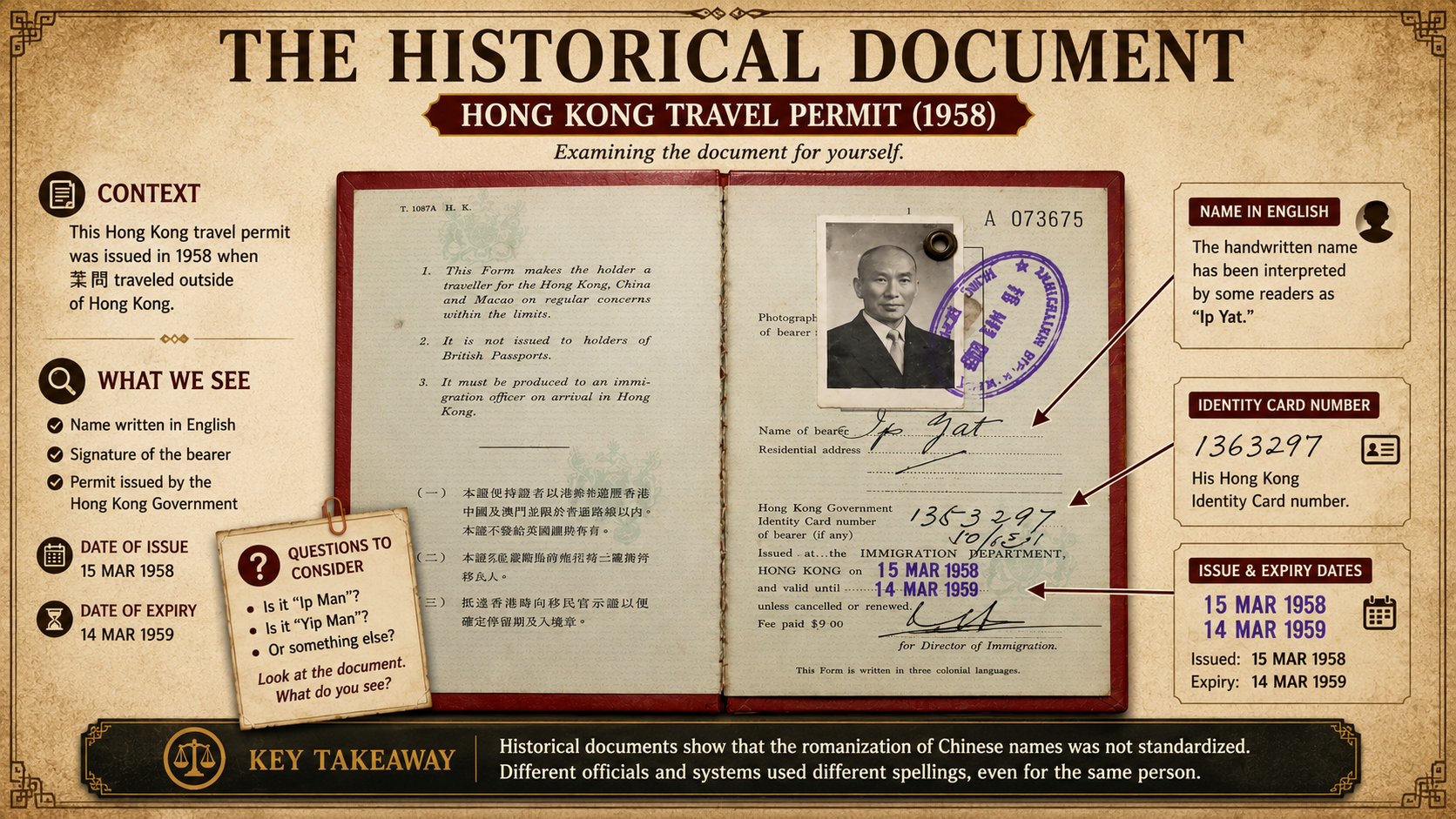
Over the years, various passports, immigration documents, identity cards, and museum exhibits have circulated online. Some are said to show “Ip Man.” Others are difficult to verify. Some contain signatures open to interpretation.
One document I examined appeared to contain a signature that looked closer to “Ip Yat” than either Ip Man or Yip Man.
That doesn’t prove anything on its own.
But it raises a point worth sitting with. Many claims repeated within martial arts circles are based on secondhand information. People repeat what they’ve heard. Then others repeat it again. Eventually the repetition itself becomes accepted as proof.
Historians call this a citation loop. The same claim gets repeated so often that people stop asking where it came from.
What Was Ip Man’s Real Name?
This may be the most important question of all.
It’s also the hardest to answer with certainty.
What we can say is that the surname Ip became firmly associated with both the family and the Wing Chun community. Whether that spelling was chosen because it best reflected pronunciation, personal preference, historical circumstance, or administrative convenience is much harder to determine.
The farther back we go, the less certainty we have.
So Which Is Correct?
The answer depends on what question you’re asking.
If you’re asking which spelling most closely reflects modern Cantonese pronunciation, Yip may be the stronger choice.
If you’re asking which spelling became historically associated with the man, his family, his students, and the global Wing Chun community, Ip is probably the stronger choice.
Both positions have evidence. Both have weaknesses.
The Real Answer
After spending time on this question, I think the debate itself teaches us something.
Most people approach history looking for certainty. History rarely cooperates. The deeper you dig, the more you find that reality is messier than the stories we inherit.
Was his name Ip Man? In many historical and martial arts contexts, yes.
Was his name Yip Man? From a pronunciation standpoint, that’s a reasonable argument too.
But the most accurate answer is that neither was the original name.
The original name was always:
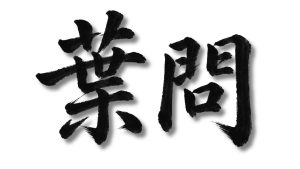
Everything else is an attempt to translate that reality into another language. And like many things in history, the translation turns out to be more complicated than we first imagined.
Frequently Asked Questions
Is it Ip Man or Yip Man?
Both refer to the same Wing Chun grandmaster. “Ip Man” is the spelling his family, students, and the films use, and it’s the most common worldwide. “Yip Man” more closely reflects modern Cantonese pronunciation. Neither is the original name.
What was Ip Man’s real name?
His name in Chinese was 葉問. Both “Ip Man” and “Yip Man” are romanizations — attempts to write those characters in the English alphabet.
Why are there two spellings?
Chinese names have no single fixed English spelling. Early twentieth-century Hong Kong had no standard romanization system, so the same name was written different ways by families, governments, and immigration offices.
Did Ip Man teach Bruce Lee?
Yes. Bruce Lee trained in Wing Chun under Ip Man in Hong Kong before moving to the United States and becoming a martial arts film legend.